


Larch Tree Autumn Care Checklist: Needle Drop, Drainage and Winter Prep
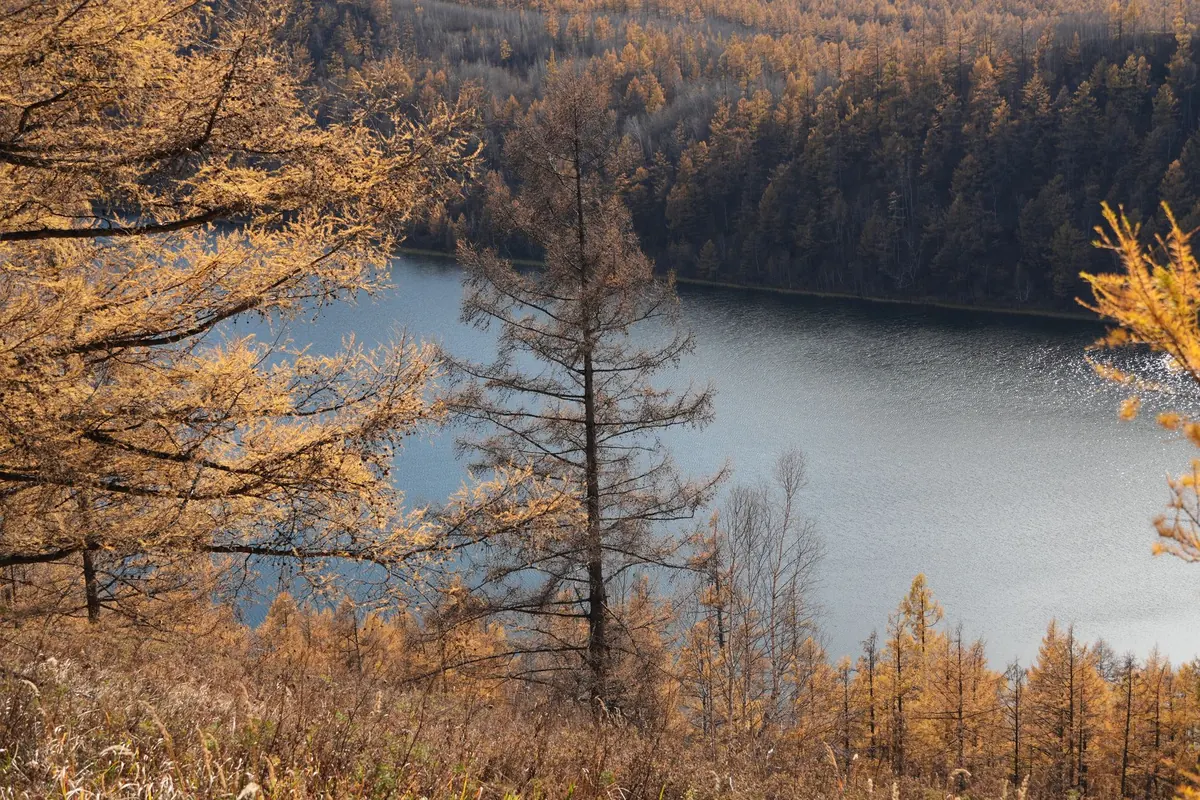
Larch is the conifer that changes its mind about winter. Through October the needles shift from green to a warm amber-gold, the tree outshines everything around it, and then it drops the lot. Bare branches by December are normal, not a rescue job. What does need doing is a short, well-timed round of autumn care: keeping that needle fall out of your drains, checking stakes and guards before the gales arrive, and settling young trees in before the first hard frost. An hour or two in November saves a lot of fiddling in February.
It also helps to know which jobs are genuinely urgent and which can wait a fortnight. Very little about a larch needs doing in a hurry, but two things won't wait forever: water and drainage. The rest — the raking, the tie-checking, the mulching — is far easier in dry daylight than in a January thaw with the ground already sodden.
Needle drop is the whole point of a larch
Larches are deciduous conifers. Unlike pines, spruces and firs, they shed their needles every year, and the colour change usually starts from late September in the north and mid-October in milder southern gardens. The needles fall over two to four weeks. Still, cool weather holds the colour; a sharp frost or a windy night can strip a tree in days.
Those needles are thin and soft rather than waxy and resin-sealed, and each autumn the tree withdraws what it can from them before letting the rest go. A mature specimen of 15 metres or so will drop tens of thousands of needles, which is why the carpet below always looks heavier than the crown above suggests. A carpet of fine, tan needles under a bare larch in December is exactly what should be happening. The signs below are not.
When needle loss is worth investigating
- Patches of needles turning brown or black while the rest of the crown is still green
- Wilting shoots, or dieback spreading from the top down and outwards
- Resin bleeding from the trunk or main branches, sometimes with sunken, dark patches of bark
- Needles dropping in midsummer, or new growth shrivelling in spring
- Bare, gnawed patches on the bark around the base, which usually means deer or rabbits
Japanese larch in particular has been badly affected in Britain by Phytophthora ramorum, a disease that can kill a tree within a season or two and spreads readily between larches. If you suspect it, don't guess at treatment. Report the tree through TreeAlert, the Forest Research reporting service, and take advice before moving any timber or needles off site. Boots and tools used near a suspect tree should be cleaned before you walk into another larch stand — the spores travel in mud and on wet foliage far more often than they travel on the wind.
Not every brown larch in autumn is sick, either. Larch casebearer can strip needles in early summer and leave a tree looking scorched by July, and larch canker shows up as sunken, resinous dead patches on branches. Both look alarming and neither is a reason to reach for a chainsaw. Photograph the symptoms, note the date, and get an identification before you act.
Keep the needle fall out of gutters, gullies and drains
Larch needles are short, light and about the shape of a matchstick, which makes them very good at matting together once they're wet. On a path that's harmless. In a gutter it isn't. A single mature larch overhanging a roof can deliver enough litter to clog a gutter run inside a fortnight, and the first you'll know about it is a damp patch on a ceiling in December.
The places worth checking weekly while needles are coming down:
- Gutter runs, especially where a branch overhangs a roof
- Downpipe hopper heads and the top of any rainwater outlet
- Gully gratings and channel drains in paths and driveways
- Soakaway covers and the grating over any French drain
- Gullies at door thresholds and in lightwells
- Rainwater butts and the mesh filter on the inlet
Use a leaf blower on low, a soft rake or gloved hands, and put what you collect on the compost or in the green waste rather than down the drain. A gutter guard or a clip-on mesh over a gully grating will save you most of this work next year.
Needles don't have to block a pipe outright to cause trouble. A half-inch mat slows the flow, water backs up behind it, and a joint that has held for thirty years starts to weep.
Where a larch stands near an older clay drain, needles aren't the main risk: roots will find an existing crack and follow the water. If drainage around the house has slowed, smells, or leaves damp patches, have the drain surveyed rather than assuming the tree is at fault.
Check stakes, ties and guards before the gales
Autumn is the last comfortable moment for this, and the problems are easy to miss from standing height. A tie that fitted in May can be biting by October, and a stake that was rock-solid in spring may have rotted through at ground level without any visible change above the soil.
- Slide a finger behind each tie. If there's no room, loosen it or move it up a notch.
- Look for a polished ring of bark or beads of resin where a tie has rubbed. Replace the tie rather than tightening it.
- Push the stake firmly from two directions. If the top moves more than a few centimetres, the base has rotted and the stake is now doing harm rather than good.
- Shake out tree guards and spirals — grass, dead leaves and insects collect inside — and lift them clear of the lowest branches.
- Press down on the soil within a spade's width of the trunk. A rootball that rocks in wet autumn ground will need re-firming before the frosts lock it in place.
Once the tree is established enough to stand on its own, take the stake out entirely. A larch left tied to a rotting post for six years grows a trunk that is thinner and weaker than it should be, and it will snap in the first proper storm after the stake finally goes.
Water young trees in, then mulch — but keep the mulch off the bark
A larch planted in the last two or three seasons is still running on the roots it arrived with, and autumn is when those roots do most of their growing. Dry spells in September and October are easy to miss because the tree is already turning gold, but a young larch that goes into winter short of water has a much harder time coming out of it.
- Water deeply once a week in dry spells, right up until the needles drop — a slow soak around the root zone beats a daily sprinkle.
- Spread a mulch of well-rotted bark or leafmould 5–8 cm deep over the root zone, keeping it a good 10 cm clear of the trunk.
- Clear grass and weeds within 60 cm of the trunk; they compete for water far more than most people expect.
- Hold off nitrogen-rich fertiliser from late summer onwards, which pushes soft growth the frost will kill. A balanced feed in spring is the one to keep.
- On heavy clay, check that water isn't standing in the planting ring. Fork the surface around the edge to break the pan rather than digging the tree up again.
If you planted into a shallow saucer of compacted clay, this is the year to fix it. Water that sits around the collar through winter is a far more common killer of young larches than cold.
What can wait until spring — and what can't
Some autumn jobs are tempting but premature. Heavy structural pruning, moving a tree, feeding, and any chemical treatment for a problem you haven't identified can all wait until the sap is rising again. So can raking every last needle off a lawn: a light scattering breaks down harmlessly, and the worms will deal with it.
What can't wait is drainage, loose stakes and dry rootballs. Nor is late winter the right time to be cutting larch branches — cuts made in spring bleed resin and heal slowly. If a limb has to come off in autumn, make one clean cut just outside the branch collar, leave it at that, and keep the saw clean between trees.
A simple November order of work
- Clear gutters, hoppers, gullies and butt filters while the needles are still falling, then check once more after the last of them has gone.
- Water any young or recently moved larch if the ground is dry, then mulch.
- Walk the stakes, ties and guards, and re-firm any rootball that rocks.
- Look up into the crown for black patches, resin or dieback, and photograph anything suspicious.
- Rake the worst of the needle fall off paths and lawns, and compost it.
- Leave the tree alone until spring unless something in step four needs reporting.
Do that and the larch will do the rest. It will look dead for three months, which is precisely the plan, and it will flush bright green in April while the spruces next to it are still standing about looking grey.
Photo: Joe Chen / Pexels