

European Larch vs Japanese Larch: Which Is Better for UK Woodlands and Gardens?
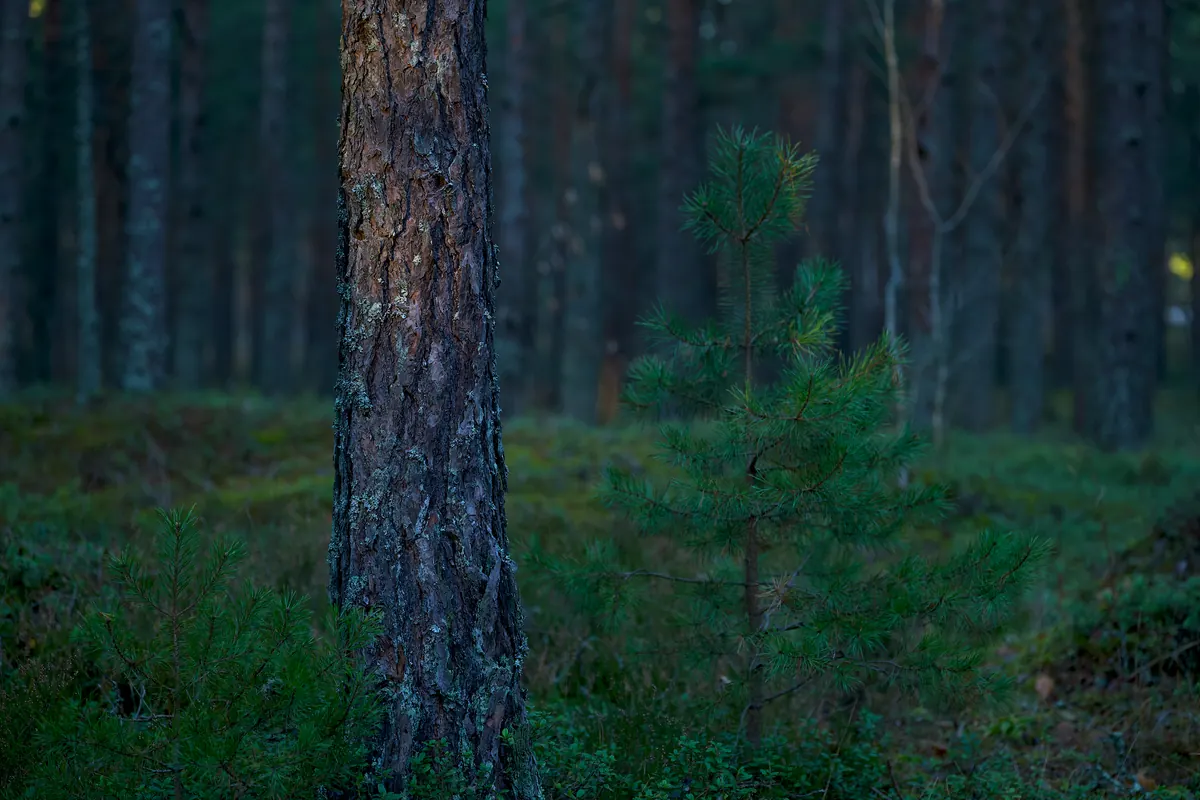
Larch is the exception among British conifers. It drops its needles every autumn, turns a soft gold before it does, and comes back in spring with a green so bright it looks lit from beneath. For a fortnight in April, a larch wood is the brightest place in the countryside.
Two species do almost all of the work here: European larch (Larix decidua) and Japanese larch (Larix kaempferi). They look similar enough that a lot of planting advice treats them as interchangeable. They are not. The right choice depends on your soil, your shelter, your altitude — and, increasingly, on what disease is doing in your part of the country.
Two species, two very different origins
European larch comes from the mountains of central Europe — the Alps, the Carpathians, the Sudetes — where it grows high up on thin, free-draining soils. It reached Britain in the seventeenth century and became the tree of choice for estate plantings and shelterbelts in Scotland and the north. Japanese larch grows on the volcanic slopes of central Japan, including around Mount Fuji, and arrived here in the 1860s. It brought a different temperament with it: faster, hungrier, and far less tolerant of cold and exposure.
There is a third option worth knowing. Dunkeld larch (Larix × eurolepis), a natural hybrid of the two, was first noticed at Dunkeld in Perthshire and has been widely planted since. It combines Japanese larch's vigour with better form and slightly denser timber — but it shares that parent's vulnerability to the disease discussed below.
Growth rate and habit
Japanese larch is one of the fastest-growing conifers in Britain. On a sheltered lowland site with decent soil, young trees can add close to a metre a year for their first couple of decades, and they put on volume fast enough to be thinned earlier than most broadleaves. The trade-off is coarser growth: heavier branches, a broader crown, more taper.
European larch is steadier — around 40–60cm a year on reasonable ground, less on poor upland sites. In return you get a finer tree: narrow crown, slender branches, straight stem, and a delicate winter outline.
All three are strongly light-demanding. None thrives under shade, and all regenerate freely from seed on open, disturbed ground, which is why larch so often appears uninvited along fence lines and track edges.
Soil, site and climate
European larch is the tougher tree. It copes with thin, stony, acid soils, high rainfall, exposure and altitude. What it dislikes is the opposite: warm, humid, sheltered lowland sites with heavy or poorly drained soil. Those are exactly the conditions in which larch canker does its worst damage. Give it a slope, some air movement and free drainage and it will look after itself.
Japanese larch wants a better site — deep, fresh, reasonably fertile loam — though it tolerates slightly heavier, damper ground than European larch. What it cannot abide is exposure, thin dry soils or a frost pocket. It flushes early, so a late frost in May can scorch the new growth and set a young tree back badly.
Neither species will grow on chalk or limestone, and neither tolerates waterlogging. Both are wind-firm once established, but young trees do better with a sheltered edge or a nurse crop while they get their roots down.
Disease resistance: the deciding factor
Two diseases dominate the argument, and they pull in opposite directions.
Larch canker
Caused by the fungus Lachnellula willkommii, canker kills patches of bark and cambium and leaves sunken, resin-soaked wounds that distort the stem. European larch is the most susceptible of the three larches grown here, especially in mild, damp lowland conditions. Japanese and Dunkeld larch are markedly more resistant. Where canker is a known local problem, that is a strong argument against planting European larch.
Phytophthora ramorum
This is the disease that has changed larch planting in Britain. Japanese larch is highly susceptible and hybrid larch nearly as bad; European larch is less so, though far from immune. Infected trees often show thin, wilting, dark canopies, and once the disease is confirmed, statutory felling of larch within a surrounding radius is usually required. Because Japanese larch produces spores so freely, it has driven much of the spread seen in south-west England, Wales and parts of Scotland.
The practical consequence is simple. Check the current position before you order trees. Larch planting and felling rules are set by the Forestry Commission in England, Scottish Forestry, Natural Resources Wales and DAERA in Northern Ireland, and they change. If your site falls inside a high-risk zone, Japanese larch is a poor long-term bet.
Timber quality and woodland use
European larch is the better timber tree by most measures: denser, stronger, more naturally durable, with a fine texture and enough resin to shrug off the weather. It has a long history in boat building, cladding, fencing, gate posts and roof shingles.
Japanese larch grows faster and shows it — wider growth rings, more knots, lower density, less natural durability. It is still a serviceable softwood for fencing, pallets, chipboard and general construction, but it will not last as long in ground contact and rarely saws as cleanly. Dunkeld larch sits between the two and is the most productive choice where disease risk allows.
One warning. Grey squirrels strip the bark of Japanese and hybrid larch far more readily than European larch, and a bad attack can ruin the butt of a promising tree. If you are growing larch for timber where squirrels are numerous, plan for control from the start.
Garden suitability
Neither species belongs in a small garden. Both can reach 20–30 metres, neither coppices, and neither regrows well from old wood — so there is no sensible way to keep one small by pruning. A larch that has outgrown its space is a problem, not a project.
Where they earn a place is on larger plots: a smallholding, a paddock edge, a long garden with room for a proper tree. Plant one where you will see it against a winter sky. Larch casts light shade, so grass and wildflowers grow beneath it, and its deep roots make it a sound windbreak on the western side of a plot.
If space is tight, choose a named garden form rather than the species. Larix decidua 'Kornik' is slow-growing and rounded, staying manageable for years, and Larix kaempferi 'Blue Dwarf' offers a similar compact habit with blue-tinted needles. Weeping larches such as 'Pendula' or 'Puli' need more room but make striking specimens. Both species also make first-rate bonsai.
For wildlife, larch is generous: the seed feeds red squirrels and crossbills, siskins work the cones, and the light canopy supports a rich ground flora. Just remember the tree is bare for four months of the year.
Which should you plant?
Strip away the detail and the choice usually comes down to site and disease risk.
- Cold, exposed upland site on thin acid soil: European larch.
- Sheltered lowland site with deep loam, outside any P. ramorum risk zone: Japanese or Dunkeld larch for vigour and early volume.
- Mild, damp lowland site with a history of canker: avoid European larch — but check disease zones before assuming Japanese larch is the answer.
- Timber where strength and durability matter: European larch, or Dunkeld if you need the growth rate.
- Nurse crop for oak, beech or other broadleaves: Japanese or Dunkeld larch, thinned hard and early.
- Small garden: a named dwarf or weeping cultivar, or something else entirely.
Then the planting itself. Buy bare-root trees and get them in between November and March, while the tree is dormant and the soil is workable. Order from a nursery that can confirm the provenance and health of its stock. Space a timber crop roughly two metres apart; plant closer for a shelterbelt you intend to thin hard. On exposed or deer-heavy sites, use guards for the first few years and keep grass, bracken and bramble off the young trees for two or three seasons. Expect to thin from around year fifteen, and be ready to fell larch promptly if P. ramorum turns up nearby.
One last thing. Before you commit to larch, spend ten minutes checking the current disease rules for your area. It is the single most useful piece of homework you can do.
Photo: Lauri Poldre / Pexels