



Growing Larch from Seed: A Beginner's Guide to Cones, Stratification and Saplings
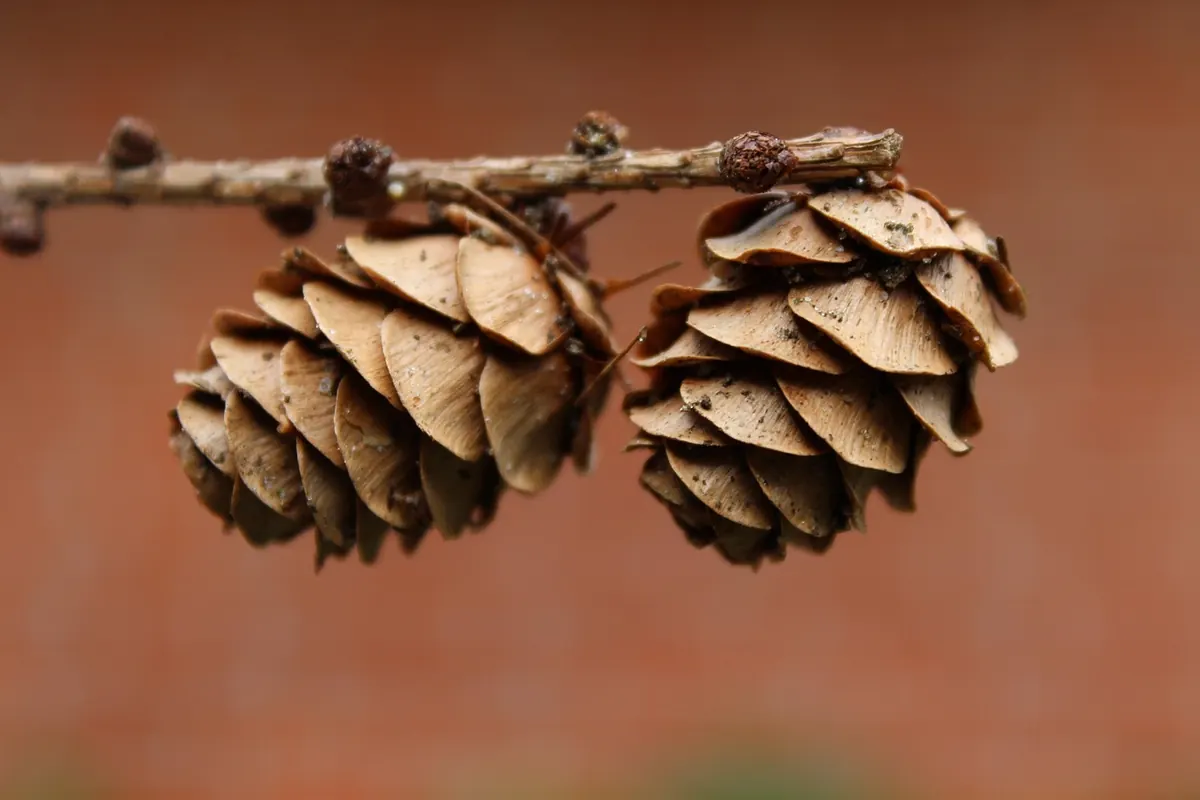
Larch is the conifer that breaks the rules. It turns gold in autumn and drops its needles, then comes back in spring with a soft green haze that no spruce or pine can match. It is also one of the more rewarding conifers to raise from seed, provided you accept one thing from the start: larch seed will not germinate until it has been through a cold, damp spell.
That requirement puts some beginners off. It shouldn't. With a fridge, a bag and a little patience, you can take a handful of cones from a September walk and end up with sturdy young trees two or three years later. Here is the whole process.
Choosing a tree and timing your collection
Larch cones are small, egg-shaped and easy to overlook in summer, when they are green and tucked in among the needles. By early autumn they turn brown and woody, and that colour change is your signal to start looking.
Several larches are grown in Britain: European larch (Larix decidua), Japanese larch (Larix kaempferi) and the hybrid between them, Dunkeld larch. Japanese larch cones have scales that curl noticeably outwards; European larch cones are neater, with scales that sit flatter. Any of them will grow well from seed, and the hybrid is usually the most vigorous of the three.
Pick cones as soon as they have turned brown but before the scales open and the seed falls. In a dry, breezy autumn a tree can shed its seed within days, so it pays to go early and finish ripening the cones indoors. Take a few from several trees rather than stripping one branch, and always ask before you pick on land that isn't yours.
Extracting seed from the cones
Spread your cones in a single layer in a shallow tray or open paper bag and leave them somewhere warm and dry — an airing cupboard, or a windowsill above a radiator. Not an oven, and not a microwave. Within a week or two the scales will open and the seed will be loose inside.
- Shake the tray gently. Dark, winged seeds and fragments of scale will drop out.
- Rub the seed between your fingers to snap off the papery wing. A light rub is enough — you don't want to crush the seed itself.
- Winnow it by tipping from one bowl to another in a light draught. The wings and chaff blow clear; the heavier seed falls into the lower bowl.
- Tip the clean seed into a labelled paper envelope and jot down the species and the date.
Good larch seed is plump and dark brown. Pale, papery seed that crumbles between finger and thumb is empty and not worth sowing. Larch seed also loses viability fairly quickly in storage, so plan to sow the following spring, or keep it cool and dry for a year at most.
Stratification: the cold that wakes the seed
Stratification simply means giving seed the cold, moist conditions it would get outdoors over winter. Without it, larch seed tends to sit there doing nothing, sometimes for months.
- Mix the seed with damp — not wet — vermiculite, sharp sand or peat-free seed compost. Squeeze a handful: it should hold together without a drop of water running out.
- Seal the mix in a labelled polythene bag or screw-top jar.
- Refrigerate at roughly 1–5°C for four to six weeks. The salad drawer is ideal; the freezer is not.
- Check weekly. Remove any mouldy seed, and rinse the rest if the mix looks suspect.
- Sow as soon as the cold period is finished.
If you would rather skip the fridge, sow outdoors in autumn instead — in a deep pot or a prepared seedbed — cover lightly with grit, and let the weather do the work. Either way, cover with mesh to keep mice and birds off, because they find larch seed as tasty as you would expect.
Sowing and germination
Sow in late winter or early spring. Use containers at least 10cm deep, because larch puts down a long taproot almost immediately and shallow trays produce stunted, sulky seedlings.
Fill with a free-draining seed compost, firm it gently, water and let it drain. Sow thinly, roughly 5mm apart, then barely cover — 2–3mm of fine grit or sieved compost is plenty. Larch seed germinates best in light, so resist the urge to bury it.
Keep the containers somewhere bright and cool, around 15–20°C, and water from below by standing the pot in a tray. Germination usually begins within two to four weeks. As soon as the first seedlings are up, move them into the best light you can give them.
Caring for seedlings through the first year
Damping-off is the main killer of young conifers: a soft rot at the base of the stem, encouraged by cool, wet, still air. Water in the morning rather than the evening, ventilate the container, and thin seedlings that are crowded together.
When the seedlings are 3–5cm tall and have produced a few true needles, prick them out into individual deep pots. Lift each one with a spoon or a pencil, hold it by a needle rather than the stem, and set it at the same depth it was growing before. Water in, keep them in light shade for a week, then move them into full light. Larch is a tree of open ground; shaded seedlings grow thin, weak and drawn.
Feed lightly from mid-spring with a balanced liquid feed at half strength, and watch for slugs, snails and vine weevil. Over winter, keep the pots outdoors in a sheltered spot, raised on feet or pot feet so they don't sit in a puddle. Larch is fully hardy; waterlogging is the real risk, not cold.
Planting out
Most larch are ready to leave the pot after two or three years, at around 40–60cm tall. Plant out between November and March, while the tree is dormant, and avoid ground that is frozen or holding water.
Choose full sun. Larch will tolerate a lot, but it dislikes deep shade and heavy, waterlogged clay. On sticky soil, plant on a slight mound, mulch with bark or leafmould, and keep the tree at the same depth it was in the pot. Give it space — these are big trees at maturity, and a larch planted a couple of metres from a boundary will cause trouble later. Stake only on windy, exposed sites, and remove the stake after two seasons.
Keep a metre around the base clear of grass and weeds for the first few years, and water through dry spells in the first two summers. One further note worth knowing: larch in Britain has been affected by Phytophthora ramorum, a disease that has led to felling in some wetter western areas. If you are planting for timber, check current forestry guidance before committing to a large scheme.
A short recap
- Collect brown cones from healthy trees in early autumn, before they open.
- Dry them somewhere warm, rub off the wings, and keep only plump, dark seed.
- Stratify in damp vermiculite in the fridge for four to six weeks.
- Sow thinly in deep pots, barely covered, in late winter.
- Grow on in full light, prick out early, and protect from slugs and waterlogging.
- Plant out in dormancy after two or three years, in sun, with room to spread.
Larch is forgiving once it is growing, and a seedbed of a dozen saplings costs little more than an afternoon's work and a walk to find the cones. Start with more seed than you think you need — some will be empty, some will rot, and the ones that come through will be worth it.
Photo: TanteTati / Pixabay